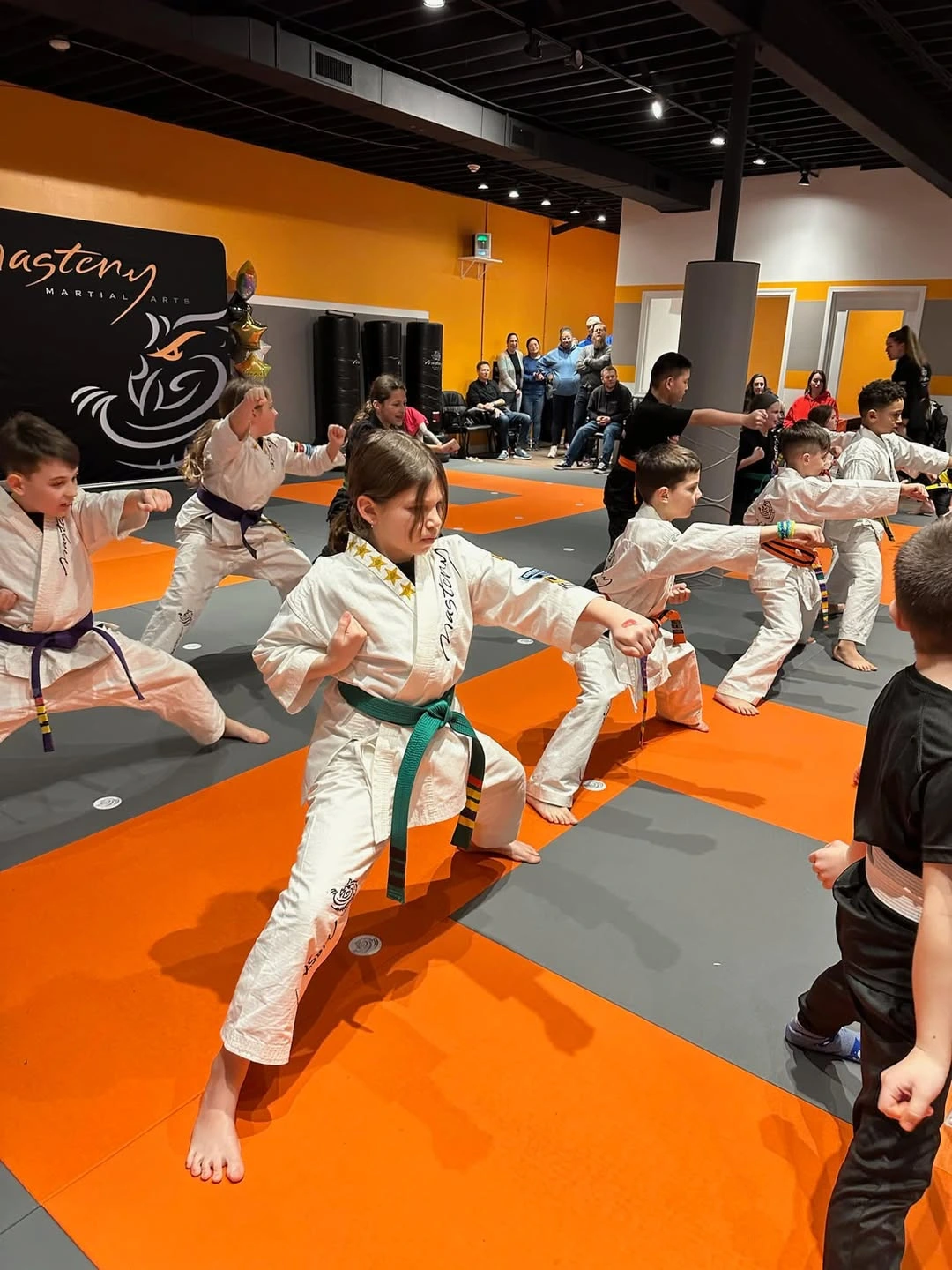
Walk into a good dojo on a weekday afternoon and you’ll see the identical scene, whatever the metropolis. A line of tots in brilliant white uniforms, a few with sleeves a little too lengthy, shuffle onto the mat with a mix of nerves and pride. Parents watch from the bench, coffee in hand. The trainer requires attention. Feet in combination, palms by way of aspects, eyes up. The room receives quiet in a way that still surprises me after years of teaching. Then the working towards starts, and the quiet offers method to the soundtrack of progress: a chorus of kiais, the slap of toes on mats, just a few giggles, and definite, the occasional annoyed sigh that leads to a smile whilst a technique clicks. That’s wherein self assurance starts offevolved, and it appears to be like a lot like play.
Karate programs for youth don't seem to be approximately turning babies into opponents. They are about giving them a framework where attempt, appreciate, and persistence pay off in ways they could see and think. The belts are only a record of that tour. The real rewards display up in how they tie their shoes, deliver their backpack, or ask a query in classification without shrinking.
Why karate connects for young people and parents
Most mother and father don’t keep for little ones martial arts programs when you consider that they prefer their seven-12 months-previous to easiest a spinning hook kick. They are seeking a architecture that is helping with center of attention, resilience, and social competencies, ideally wrapped in an process their child will the fact is stick with. Karate earns its area since it blends field with mind's eye, and it does it in quick, gratifying cycles. A boy or girl tries a stance, receives comments, tries once again, and nails it inside minutes. That sense of mastery, repeated two or three times a category, will become addictive in the absolute best method.
This is absolutely not wishful questioning. You can watch a shy 5-12 months-previous realize her voice by using researching to kiai. See a stressed eight-12 months-ancient find stillness in seiza. Listen to how a educate addresses a slipped well-known, like a loose fist, with a cue that lands: squeeze a lemon to your palm. Over time, these small, bright cues create a toolkit young people lift beyond the mat.
What a well-run elegance truly appears to be like like
A usual hour for youthful young children begins with a quick bow and a hot-up. We movement joints by using their diversity, awaken hips and shoulders, then build a little warmth with animal walks, mild walking, and games that sneak in agility. You may well see a line of crab-strolling ninjas looking no longer to spill a foam block balanced on their stomachs. It seems to be foolish, and this is, but it also builds core force that later supports steady stances.
Next comes fundamentals. Stances, blocks, moves, and footwork style the root. A very good instructor makes use of crisp demonstrations and sensible language. Instead of “chamber your fist in your hip,” we are saying “park your hand like a coach arriving on the station.” The metaphor sticks, and so does the procedure. Reps are short for the youngest ages, regularly in sets of 5 to hinder cognizance brand new, and layered with reward for effort and corrections that concentrate on one issue at a time.
Then we shift to implemented observe. Light companion drills coach distance and timing, recurrently with pads to save it safe and tactile. Children love the feedback of a pad thump while a punch lands safely. Kata or kinds may well enter the following, especially for adolescents seven and up. Forms deliver structure and allow both newborn carry out something from commence to end, which builds reminiscence and pleasure.
We finish with a cool-down and a short chat anchored to a personality subject of the week. Younger belts may possibly dialogue about accountability with a concrete steered: what does a responsible bed room look like tonight at 7 p.m.? The objective is to glue dojo conduct to residence life without preaching.
Safety first, and not just pads and rules
Parents ask approximately safeguard early, and so they should. The perfect software units clean boundaries. Contact is controlled and progressive. Younger students focal point on manner, aims, and manipulate instead of loose sparring. The surface is a forgiving mat, and the gadget matches small fingers.
But protection is greater than tools. It’s tone. An teacher who items calm firmness whilst a class runs warm prevents injuries until now they appear. Cues are brief, youngsters understand where to stand, and transitions show up on a sensible sign. When we educate a brand new kick, we express it slowly, from a number of angles, then we damage the move into portions. We prevent the number of little ones moving right now to a rely that fits the room length. In a category of twelve, six kicking and 6 keeping pads hits a sweet spot. This assists in keeping the potential prime and the chaos low.
Parents need to additionally search for how a dojo handles emotional security. If a little one freezes or cries mid-drill, does the instructor kneel to eye level, supply space to respire, and provide a small, win-prepared challenge to reenter? Are corrections respectful and explicit rather than loud and shaming? A kid who feels trustworthy tries harder. A little one who tries more difficult learns speedier. It is not very problematical, however it does take field from the adults inside the room.
The belt travel, with out the power cooker
Belts inspire youngsters the way examining ranges encourage early readers. They are milestones, not verdicts. In organic youth karate programs, the course among belts is measured in hours on the mat and genuine advantage verified, now not in vague provides. A white belt could be requested to reveal a strong entrance stance, a straight punch, and two straight forward blocks. Yellow belt provides a type, a primary blend, and the skill to continue cognizance in line. Expect a cadence of two to 4 months among early ranks for regular attendance, then longer among upper ranks as methods develop into more tricky.
Testing, while dealt with effectively, seems like a celebration with concepts. Students recognise what's estimated weeks in advance, have a couple of opportunities to rehearse publicly, and obtain comments alongside the means. The try out itself is public and calm. We don’t spring surprises on six-12 months-olds, and we don’t bypass students who are usually not all set, however we body a retest as every other step, now not a failure. You need a dojo that guards the meaning of its belts with no turning a kid’s development into a scoreboard for adults.
What differences you will expect in the first 3 months
At four to six weeks, the most important shift is traditionally events. Children bow in expectantly, line up swifter, and follow multi-step instructional materials with fewer reminders. The physique cognizance presentations up quietly. Watch how your infant stands at the sink or contains a bag. You would possibly word straighter posture and fewer accidental bumps into door frames.
By the second month, most young children very own a handful of programs: a legit front kick, a decent fist, a secure base. Their kiai gets louder because their sense of belonging grows. The category friendships start to kind the following as neatly. Partners who held pads for each one other closing week depend and pair up to come back.
By month 3, the intellectual muscles grow to be visual. You hear phrases like “can I strive once more” instead of “I can’t.” Homework will get a little smoother, not given that karate teaches kids karate classes multiplication, yet because it trains sustained attempt in digestible bites. Parents occasionally record small yet significant shifts, like a toddler providing to set the table or tackling a messy room with no a meltdown. That’s now not magic. It’s sample transfer.
Lessons from the mat: tales that stick
Years ago, a primary-grader named Leo shuffled into category together with his gaze glued to the ground. He answered each and every question with a whisper, if at all. For two weeks we labored on eye touch and voice by way of video games. The one that became the lock became useful. I located a foam objective on the mat ten feet away and advised him, if your kiai reaches that pad, it counts as a success. He tried 3 instances, voice wavering, then let out a shout that startled him. The total class clapped. After that, his jawline lifted whilst he walked in. At homestead, his mom said, he commenced talking up at dinner. Karate didn’t exchange his personality, yet it gave him a dependable place to practice being heard.
Another toddler, Maya, turned into staggering and impatient. She picked up suggestions swift and grew pissed off whilst others didn’t. During a companion drill, her kicks acquired sloppy with speed. We positioned a paper cup at the pad and told her the goal used to be to tip the cup without crushing it. It took precision and management. She bogged down, centred, and grinned when the cup toppled in order that. From then on, when her velocity outran her manipulate, we used the cup cue. She discovered that pace is basically surprising while it serves accuracy. That lesson echoed in her schoolwork whilst she stopped rushing math to be first done and commenced aiming for no erasures.
The precise age to start, and tips on how to suit category to child
Readiness varies greater by way of temperament than by calendar. Many dojos be offering instructions starting round 4 or five, quite often often called Lil’ Ninjas, Tiny Tigers, or an identical. These sessions consciousness on flow patterns, listening advantage, and enjoyable, now not on memorizing lengthy types. If a infant can stick to a 3-step guide and appreciate community activities for 30 minutes, they may be seemingly well prepared to test.
If your boy or girl is six to eight, seek combined-age amateur sessions with careful grouping at the mat. Older inexperienced persons, 9 to twelve, profit from a relatively greater technical velocity and an instructor who can steadiness novice humility with age-top hassle. Teens want area to go and sweat, consisting of a voice of their targets. If they favor to consciousness on rivalry kata or secure sparring, this system may still make room for that.
Neurodiversity and sensory demands belong inside the dialog. A great school is prepared to establish predictable workouts, visual schedules, or shorter category segments for little toddlers who receive advantages from them. I actually have taught students who wore noise-dampening headphones for the primary month and slowly phased them out. I’ve also taught pupils who obligatory a one-on-one start formerly becoming a member of the institution. Don’t be shy approximately asking. The exact trainer sees power, now not hindrances.
How play suits into extreme learning
You can tell when a dojo respects childhood via the means it makes use of games. The aim isn’t to burn time but to embed competencies. Think of shark and minnows with footwork rules that show angles and evasions. Or relay races where the baton is a focus pad and every one leg calls for a the different stance. Kids are pleased to repeat reps while the rep lives internal a tale.
One of our favourite drills is replicate taking walks. Partners face each one other. The leader strikes in stances, ahead and again, facet to aspect, and the reflect follows. Add a rule like touch the white line but no longer the pink tile and the sport turns into a geometry lesson for the toes. Later, when we instruct ring regulate in sparring, that foot information is already established.
The severe phase is hidden within the constraints. We depend out loud jointly, insist on clean re-chambering, and pause the game to celebrate a technically lovely second. That blend, exciting wrapped around a clean customary, is the place increase leaps beforehand.
Parents as partners, no longer spectators
The strongest programs deal with mom and dad as allies. You will not be only a chauffeur. You set the tone around consistency and attempt at domicile. A little homework goes a protracted means here, and it doesn’t desire to be fancy. Have your kid educate you their prepared stance and kiai beforehand dinner, or ask them to illustrate the week’s block for a grandparent on video. Cheer the attempt even when the methodology wobbles.
If you’re choosing between teenagers karate sessions, ask how verbal exchange works. Do you accept quick development notes or hints after category? Are there clean expectations for uniform care, on-time arrival, and absences? When a dojo communicates smartly, households settle into a rhythm that supports the child.
Also, balance enthusiasm with staying power. Progress for youngsters seems to be jagged, no longer linear. A little one would possibly surge for a month, then plateau at the same time as the mind knits new coordination. If you hit a stretch of resistance, speak to the teacher. Sometimes adjusting category time to more effective align with your baby’s energy solves it. Other instances, environment a small, tangible function re-lights motivation, like landing ten highest front kicks at the pad before bedtime two times a week.
The social textile of the dojo
Children analyze from friends at the least as so much as from adults. A mixed-rank line lets white belts see what is potential and brown belts keep in mind how a long way they’ve come. Older youngsters who help in newbie lessons acquire leadership knowledge and empathy. Younger childrens learn to stick to, wait their flip, and supply encouragement.
Sparring way of life deserves wonderful realization. For many adolescents, the principle feels thrilling and frightening. Done desirable, it turns into a masterclass in strength of mind and recognize. We get started with distance drills, then add easy tag with clean goals, then tools, then supervised rounds with level law. The message is regular: we're the following to trouble and protect both different at the equal time. If a dojo treats sparring as a hazard to attain features with out regard for spouse safety, transfer on.
What to seek whilst visiting a school
Before you commit, sit down in on not less than one magnificence. You will be taught more in 45 minutes on a bench than in advertising and marketing copy. Here is a instant tick list that separates forged systems from the rest:
- Structure and pacing: Does the class stream with intention, with minimum lifeless time and clean transitions? Instructor presence: Do coaches deliver concise cues, identify detailed corrections, and realize equally effort and outcomes? Student behavior: Are youngsters engaged greater than 80 percent of the time, with respectful voice degrees and swift line-america Safety requirements: Is contact controlled, equipment in perfect repair, and area controlled so nobody collides? Culture: Do students bow in with focus, assist each different with pads, and go away the mat just a little taller than they arrived?
If a faculty assessments these bins and your newborn walks out smiling, you’ve discovered a strong preference.
Costs, schedules, and what price appears to be like like
Tuition varies with the aid of neighborhood, but for context, staff little ones courses regularly number between $one hundred and $a hundred and eighty per month for 2 instructions per week. Some courses come with limitless courses at a better tier. Uniforms add a one-time expense, routinely $30 to $60 for a amateur gi that allows you to survive many washes. Testing fees exist, more commonly $20 to $50 for early belts. Ask for transparency the following. Hidden rates breed resentment.
Value exhibits up in consistent guideline, blank facilities, and lessons that soar and end on time. It also shows up in team continuity. If a new face leads type each and every week, little toddlers fight to build belief. A steady trainer community, even two or three regularly occurring coaches, makes a change.
Schedules rely for kinfolk existence. The sweet spot for so much primary-aged teens is two periods per week, separated with the aid of a day. Fewer than that, and progress stalls. More than this is possible for encouraged kids, yet await burnout, notably if karate stacks with other activities. Some dojos offer Saturday morning make-up lessons, a lifesaver for families with unpredictable weekday evenings.
How karate helps little ones past the mat
People often attach karate with self-discipline, but that observe can sound joyless except we define it. Discipline in this context way selecting what you favor most over what you prefer now. Karate trains that selection in chew-measurement moments. Hold your stance for a number of seconds longer. Repeat the kind competently in place of sloppily. Show respect even once you feel worn-out. That development will become a reflex that spills into other parts.
Confidence rises given that action leads the approach. A newborn learns she will do challenging matters through doing them, now not through listening to about them. Resilience builds via controlled challenge. Tango with frustration all over a complicated block, recuperate, and test once more. Social courage grows while a youngster spars, bows, and thanks a partner, distinctly a accomplice who moves sooner or hits more durable. That combination of humility and resolution is rare in different adolescence actions.
The bodily merits are undemanding. Balance improves first, then coordination and pressure. Many young children coach more suitable cardio patience after a couple of months. Flexibility, notably in hips and hamstrings, makes widely wide-spread motion less complicated and reduces that tight, injury-companies feeling for the time of progress spurts. The key right here is balanced working towards. Karate builds the entrance of the frame if we allow it, so wonderful systems encompass pulling motions, posterior chain work, and rotational drills to circumvent the rounded-shoulder seem that displays already inspire.
When karate might not be the good fit
Honesty supports every person. Some children do now not click on with karate, and it truly is alright. If your little one prospers on unstructured play and rebels at team guidelines, they may merit from a season of parkour or gymnastics first to burn vigor and construct proprioception. A pretty competitive toddler who seeks collision may want a software with tight obstacles and mature companions, or a pause at the same time as they analyze self-rules because of counseling or family unit aid. Also evaluate logistics. If the handiest class you could regularly attend starts off at 7 p.m. and your 2d-grader melts after 6, the excellent dojo in the global received’t assistance.

Watch for caution indicators in a school too. If you see shaming language, unchecked roughness, or a revenue pitch that pressures you to signal a protracted settlement as of late or miss out eternally, have confidence your instincts and maintain taking a look. Karate deserve to really feel like a group you connect, now not a product you’re hustled into.
Tips for a effective start off at home
A few small behavior make the ones first weeks smoother:

- Set a category ritual: uniform folded on a hook, water bottle filled, belt tied in combination and put with sneakers half-hour beforehand departure. Name the win: after every classification, ask your boy or girl to percentage one factor they did greater than closing time and one element they want to practice this week. Keep observe tiny: 5 minutes counts. A handful of blank kicks on a pillow or a quiet stance continue when you study a recipe is enough. Protect sleep: childrens learn skills in classification, yet they consolidate them right through rest. Prioritize bedtime on guidance days. Model admire: use dojo phrases at domicile, like “please bow in” as a playful cue earlier than a fast train. It reinforces consistency with no stress.
These little anchors sign that karate topics and that your kinfolk backs the effort.
Choosing between karate and other young people martial arts classes
Parents often times ask, why karate over taekwondo, judo, or Brazilian jiu-jitsu? The verifiable truth is, nice training matters more than fashion on the beginner point. Karate’s strengths contain clear construction, incredible basics, and forms that enhance reminiscence and attention. Taekwondo by and large emphasizes kicks and athleticism, which some children love. Judo and BJJ provide early grappling literacy and shut touch cognizance, excellent for self-safety realism and confidence in actual play.
If your infant is drawn to movement styles that consider like dancing with potential, karate suits. If they cartwheel around the dwelling room and love to jump, they would lean in the direction of taekwondo. If they struggle at the carpet and love puzzles, grappling arts shine. You may go-coach later. What matters so much is searching a place wherein your toddler feels reliable, visible, and challenged.
The lengthy view: increasing champions, not trophies
The title at the wall matters much less than the habits your baby builds. Champions aren’t made by means of medals alone. They grow as a result of every day practices that stack through the years. Showing up whilst it rains. Tying a belt intently. Listening when a instruct affords a correction that stings, then making use of it. Encouraging a youthful scholar who appears to be like misplaced. These micro-moments build a sort of trust that sticks.
I nonetheless pay attention from former scholars who commenced in youngsters karate classes a decade in the past. One is a nurse who credit her calm below strain to years of sparring in which she found out to respire and choose with a clean head. Another is a high-faculty trainer who uses dojo call-and-response to settle a rowdy elegance. A 3rd, now in institution, observed the first-class reward karate gave him used to be the behavior of taking tremendous objectives and cutting them into small portions he can do immediately.
That is the promise of a amusing, well-run karate program for youth. Not a pipeline to a black belt at rfile velocity, yet a set of tools for life, introduced in a structure young children love. The mats changed into a checking out floor where braveness grows Mastery Martial Arts - Troy karate classes for kids in workable doses, where admire isn’t a poster but a exercise, and where play and self-discipline share the same area devoid of canceling each other out.
If you’re on account that karate courses for teenagers, go to a dojo and watch. See how the coaches talk to the young ones, how the young children discuss to each different, and how your baby’s face seems to be at the stroll back to the car. If there may be a spark, give it a season. Tie the belt, % the water bottle, and let the movements do its work. Confidence hardly arrives with fanfare. It reveals up on an undemanding Thursday, halfway by magnificence, whilst a kid who as soon as reported I can’t increases a hand and asks, can I try out lower back? That’s the moment you’re making an investment in, and it’s worth each minute on the bench.